AI Literacy for Citizen Participation Report
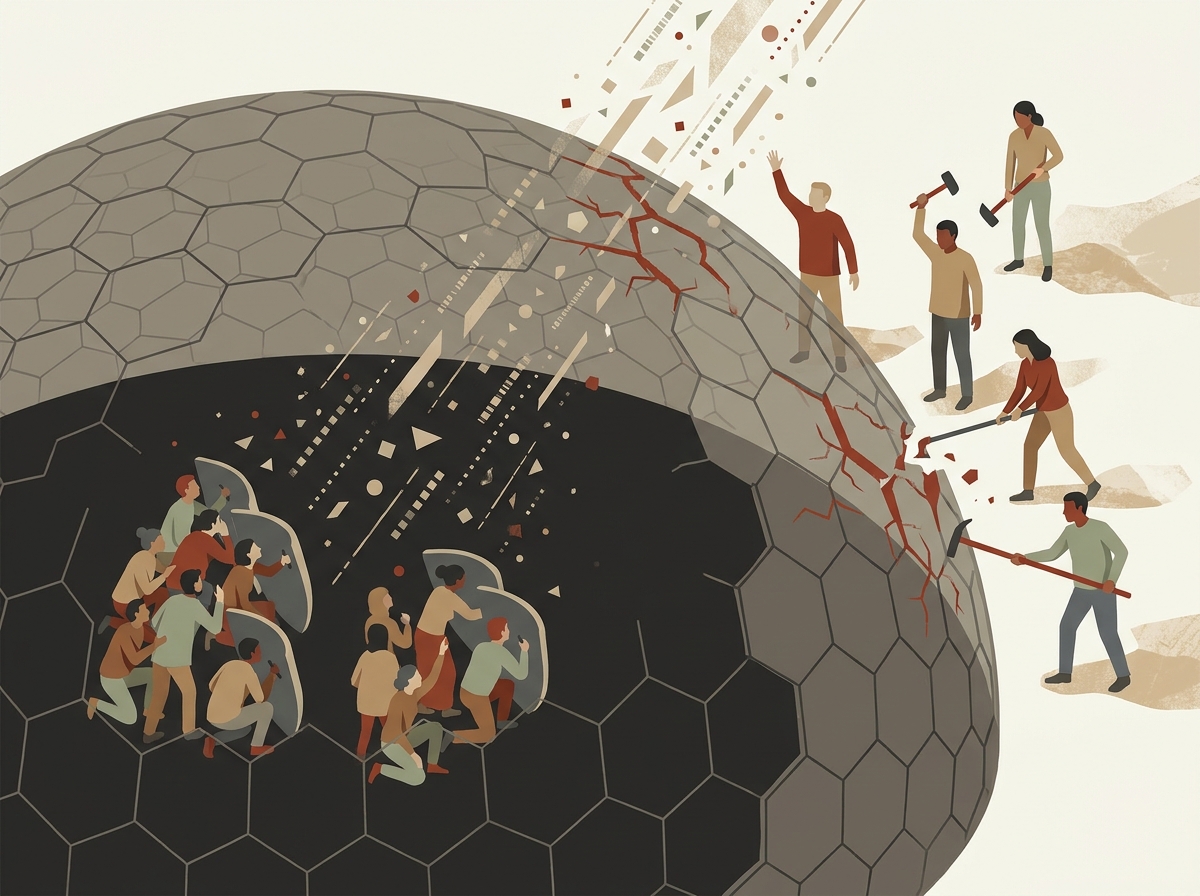
Analysis of 958 AI literacy sources this week — a subset of the 4,004 tracked across all categories — reveals a discourse organized around defense, not participation. The citizen-as-participant framing, the notion that ordinary people should help shape how AI is governed rather than merely survive it, surfaces in only a small minority of sources. Most treat literacy as a kind of personal armor: learn the tricks, spot the fakes, protect yourself and your children. That is a worthy goal. It is also a narrowing one, and the narrowing is worth watching.
The landscape. Two prior editions of this report treated AI literacy as a balancing act — workforce readiness against ethical judgment, education against inequality. The evidence this week has shifted the center of gravity. The dominant frame is no longer preparation; it is threat response. The heaviest clusters concern election deepfakes, scams, and synthetic media: a Guardian investigation into whether AI can equalize political advertising or will simply industrialize lying Can AI equalize political campaign ads – or will it remain a tool for spreading lies?, a French-language warning against IA-generated fake news Lutter contre les fake news générées par IA : entretien avec Chine Labbe, and UNESCO’s own framing of disinformation as the central literacy challenge Inteligencia artificial y desinformación - UNESCO. Literacy, in this telling, is what stands between you and the machine that is coming for your attention.
Whose literacy. Here the discourse is lopsided. The people defining literacy — framework authors, fact-checking institutions, election officials, vendors — are rarely the people the frameworks are for. The formal scaffolding is expert-authored: the ED-published framework for understanding and evaluating emerging AI PDF AI Literacy: A Framework to Understand, Evaluate, and Use Emerging …, fact-checkers debating community notes and AI integration among themselves Fact-checking at a crossroads: Fact checkers’ perspectives …. The rare counter-example is instructive precisely because it is rare: Snohomish County, Washington, handed its residents the pen and asked them to write the county’s AI policy through a civic assembly Snohomish County looks to its residents for AI policy. That is citizen literacy as authorship rather than instruction — and it is the exception that exposes the rule.
What’s being taught. Overwhelmingly: detection and self-protection. Recognize a deepfake (Deepfakes in the 2024 US Presidential Election); understand which of the twenty-plus states now criminalize synthetic election media (How 20 States Are Now Regulating Deepfakes—and What It Means for Elections); guard your identity against AI-driven scams — advice pitched, tellingly, to specific vulnerable communities such as Latinos in the US Estafas con IA y Deepfakes: Como Protegerte Siendo Latino en USA 2026. But note the useful complication buried in the Knight Columbia review of 78 election deepfakes: political misinformation, the authors argue, is not fundamentally an AI problem We Looked at 78 Election Deepfakes. Political Misinformation Is Not an …. If they are right, a literacy curriculum built entirely around spotting synthetic media trains people to watch the wrong door.
What’s missing. The competency almost nobody teaches is understanding when AI is being used on you in the mundane, consequential cases — the mental-health app profiling your mood AI, neuroscience, and data are fueling personalized mental health care, the productivity suite ingesting your documents Data, Privacy, and Security for Microsoft 365 Copilot, the hiring or benefits system quietly discriminating until a lawsuit surfaces it Lead Article: When Machines Discriminate: The Rise of AI Bias Lawsuits. Detection literacy assumes the harm announces itself. Most of it doesn’t. And the populations most exposed — non-English speakers, the elderly, the already-surveilled — appear in this discourse as targets to be protected, almost never as participants with a vote on the rules.
Core Tensions
The concept of “AI literacy” conceals genuine tensions about what citizens need to know and why. Our reading of this week’s evidence maps six recurring contradictions. The most fundamental: technical skill versus critical understanding—whether being “literate” means knowing how to prompt a model, or knowing when to distrust one. This isn’t a knowledge gap to fill. It’s contested terrain, and the party that gets to define “literacy” quietly wins the right to decide what citizens are allowed to demand.
Watch the first move closely. The dominant vendor framing treats literacy as operational competence: learn the interface, respect the privacy settings, use the tool responsibly. Microsoft’s own documentation for its flagship assistant reads as a masterclass in this register—pages of reassurance about data handling and compliance that teach you to operate the product safely Data, Privacy, and Security for Microsoft 365 Copilot. Nothing there teaches you to ask whether the product should exist in your workflow at all. Compare that to the framework literature, which insists literacy must include evaluating, contesting, and refusing AI outputs, not merely producing them PDF AI Literacy: A Framework to Understand, Evaluate, and Use Emerging …. The gap between “use it well” and “judge it well” is the whole game.
The second tension—individual competency versus collective governance—is where citizen literacy diverges hardest from consumer literacy. Most literacy discourse addresses you as a lone user sharpening your personal judgment against deepfakes and scams. And there is plenty to sharpen: this week brought fresh reporting on AI-assisted identity theft targeting students’ financial aid Scams to steal college financial aid are using AI for identity theft …, on deepfake fraud pitched specifically at Latino communities Estafas con IA y Deepfakes: Como Protegerte Siendo Latino en USA 2026, and on AI-generated sexual imagery reaching one in twenty-five teens One in 25 teens affected by AI-assisted online sexual …. But note what the individual-competency frame does: it converts a governance failure into a personal vigilance chore. Snohomish County took the opposite bet this week, handing a randomly selected civic assembly the job of writing the county’s AI policy—treating literacy as something a public does together, not something a consumer buys alone Snohomish County looks to its residents for AI policy.
The third tension—protection FROM versus empowerment WITH—is where the misinformation panic distorts the evidence. The reflex is to frame citizens as victims needing defense. Yet the Knight Columbia analysis of 78 election deepfakes reached a deflationary conclusion: political misinformation is not fundamentally an AI problem, and treating it as one misdirects both attention and money We Looked at 78 Election Deepfakes. Political Misinformation Is Not an …. Fact-checkers themselves report they are being asked to solve, with AI integration, a problem that is more social than technical Fact-checking at a crossroads: Fact checkers’ perspectives …. Meanwhile the empowerment case is real but double-edged: AI could democratize political ad-making or industrialize the lie, depending on who holds the levers Can AI equalize political campaign ads – or will it remain a tool for spreading lies?.
Now the metaphors, because they do more work than any definition. Across the corpus, AI is overwhelmingly a Tool (304 instances) and occasionally a Threat (52). Both framings position the citizen as external to the system—the Tool frame casts you as operator, the Threat frame as target. Each implies a different literacy: mastery in one case, vigilance in the other. What almost never appears is Partner (7 instances). And that scarcity is telling, because the Partner framing would demand something neither vendor nor regulator is eager to grant—that citizens have standing to negotiate the terms, not just accept or evade them. The bias-lawsuit surge shows what happens absent that standing: harms get litigated after the fact rather than governed before Lead Article: When Machines Discriminate: The Rise of AI Bias Lawsuits.
Here is how a citizen tests any literacy program on offer: ask which metaphor it assumes, and whom that metaphor makes responsible. If the answer is always you—your vigilance, your prompting skill, your settings—it is consumer literacy wearing a civic costume Generative AI and misinformation: a scoping review of the role of ….
Power & Agency Analysis
Power in AI literacy operates through definition: whoever decides what citizens “need to know” also decides what stays invisible. Our reading of this week’s sources finds the same lopsided pattern that runs through most public writing about AI — the language overwhelmingly casts these systems as tools (the dominant metaphor by a wide margin, some 304 framings against just 52 that treat AI as a threat). That ratio is not neutral. A tool has a user; a tool does what it is told; a tool cannot be blamed. When the vocabulary defaults to tool, agency quietly migrates to the person holding it, and the company that built and priced and trained it recedes from view. This framing matters for citizens because it tells you where to look for responsibility — and points you at yourself.
How AI is portrayed
Watch how agency gets assigned in coverage of harm. When financial-aid systems are drained by fabricated identities, the story is told as machines acting — scams that “use AI for identity theft” Scams to steal college financial aid are using AI for identity theft … — even though the Information Technology and Innovation Foundation locates the actual failure in weak verification infrastructure, a human design choice Ghost Student Fraud Is a Digital Identity Failure. The grammar of “AI did it” is convenient for the institutions that chose the system. The same slippage appears when hiring or lending software produces discriminatory outcomes and the resulting litigation has to re-establish that a human deployed the model Lead Article: When Machines Discriminate: The Rise of AI Bias Lawsuits. A literate citizen learns to run the sentence backward: when a headline says AI decided, ask who deployed, who profited, who declined to check.
Who defines literacy
The definitions arriving in public are not written by the public. AI literacy frameworks are largely authored by researchers, foundations, and platform companies — see the structure of instruments like PDF Empowering Learners for the Age of AI and PDF AI Literacy: A Framework to Understand, Evaluate, and Use Emerging …, which tend to center competent use of systems over the capacity to refuse, contest, or govern them. Microsoft’s own documentation on how Copilot handles your data is a literacy artifact too, one that teaches trust in the vendor’s boundaries as it defines them Data, Privacy, and Security for Microsoft 365 Copilot. The rare countercurrent is genuinely democratic: Snohomish County handed the drafting of its AI policy to an assembly of ordinary residents rather than a vendor or a consultancy Snohomish County looks to its residents for AI policy. That is what it looks like when literacy is defined from below rather than delivered from above.
What metaphors teach
The tool metaphor obscures the fact that these systems are owned, metered, and updated by parties whose interests are not yours. The threat metaphor, meanwhile, does its own work: it drives panic and, with it, appetite for centralized control. The Knight Columbia study of 78 election deepfakes is the essential corrective here — it found that political misinformation is “not an AI problem” so much as a demand problem, with old-fashioned lies still doing most of the damage We Looked at 78 Election Deepfakes. Political Misinformation Is Not an …. Fact-checkers interviewed at Harvard’s Misinformation Review say much the same: the deepfake spectacle can crowd out the slower literacy of source evaluation Fact-checking at a crossroads: Fact checkers’ perspectives …. A third framing deserves rescue — AI as equalizer, the promise that cheap generation lets underfunded campaigns compete Can AI equalize political campaign ads – or will it remain a tool for spreading lies?. Critical metaphor literacy means noticing that each frame nominates a different villain and a different remedy.
Citizen agency
So what power do you actually hold? Less than the vendors imply and more than the panic suggests. Individually, knowing that harm traces to human deployment lets you address complaints to accountable parties — the twenty-plus U.S. states now regulating synthetic political media exist because citizens named institutions, not algorithms How 20 States Are Now Regulating Deepfakes—and What It Means for Elections. Collectively, the leverage is larger: UNESCO frames disinformation resilience as a public capacity to be built, not a product to be bought Inteligencia artificial y desinformación - UNESCO. The citizen assembly model is the concrete version of that — agency exercised not by mastering the tool but by writing the rules under which everyone must use it.
Failure Genealogy
Literacy failures differ from technical failures: they occur when citizens misunderstand what AI is, what it’s doing, or how to evaluate it. The tool works exactly as built; the person using it — or being used by it — has the wrong model in their head. Our analysis this week surfaces four recurring patterns in how understanding breaks down, and a fifth that complicates the whole story.
Where understanding fails. The first and most seductive failure is over-trust: accepting an AI-generated claim, image, or recommendation because it arrives fluent and confident. But the mirror-image failure matters just as much. When researchers actually catalogued the 2024 election cycle, they found that the more common problem was not people being fooled by deepfakes — it was people using “it’s probably AI” as a universal solvent to dismiss authentic evidence they disliked. The Knight Columbia team that examined 78 election deepfakes concluded the disinformation crisis is “not an AI problem” so much as a demand problem: people seek out content that confirms them, and AI merely lowers the price of supplying it. A citizenry that has learned only to fear synthetic media, without learning to verify anything, has acquired a reflex, not a skill. Detection, meanwhile, remains genuinely hard — Berkeley’s Hany Farid documents that detecting deepfakes in the 2024 election defeated most untrained observers, which means “just look closely” is not a literacy strategy anyone should sell you.
What assumptions mislead. Three assumptions do the most damage. The first is that AI output is a report on reality rather than a plausible-sounding pattern — a misread that a scoping review of generative AI and misinformation ties directly to how confidently these systems fabricate. The second is that “my data stays mine.” Enterprise documentation like Microsoft’s own privacy terms for 365 Copilot rewards close reading precisely because most users never do it; the protection failure isn’t malice, it’s the assumption that a default setting reflects your interest rather than the vendor’s. The third is that the person on the other end is who they claim to be — the assumption that AI-driven identity scams exploit ruthlessly, whether through deepfake fraud targeting Latino communities or the AI-assisted identity theft draining college financial aid.
Consequences of the gaps. These failures are not evenly distributed, and that is the part worth watching. The costs land hardest on people with the least slack — those targeted by identity fraud who lack the time or documentation to fight it, communities addressed by scams engineered in their language, and children, with one in twenty-five teens affected by AI-assisted image abuse. At the collective level, the corrosive cost is trust itself. When fact-checkers describe their work as at a crossroads — squeezed between platform community-notes and AI-generated volume — and disinformation specialist Chine Labbé warns of industrial-scale fake-news generation, the harm is not any single lie but a general discount applied to all evidence.
What would help — honestly. The agency failure is the one literacy can most directly address: not knowing when to refuse, slow down, or demand provenance. A frameworks like Empowering Learners for the Age of AI is right that evaluation must be taught as habit, not trivia. But be skeptical of any account that ends at personal skill. When twenty states regulate deepfakes and Morocco’s electoral authorities debate structural ripostes, they concede the point: individual literacy cannot carry a load that provenance standards, platform design, and law were built to share. Teaching citizens to verify is necessary. Telling them it is sufficient is its own kind of failure.
Evidence Synthesis
Synthesizing findings drawn from this week’s 4004 sources, the evidence on AI literacy points to a finding that unsettles the usual framing: the capacity that matters most for citizens is not knowing how to use the tools, but knowing how to govern their use — individually and collectively. This goes beyond technical skill. The competence in demand is civic: judging synthetic evidence, contesting automated decisions, and participating in the rules that will bind everyone.
What the evidence shows
Start with the most concrete signal. In Washington, Snohomish County looks to its residents for AI policy — a civic assembly of ordinary residents is being tasked with drafting the county’s AI rules. This is literacy operationalized as governance, not as a course completion. It presumes citizens can reach defensible judgments about systems few of them built. What supports that presumption? The consensus framework work — PDF Empowering Learners for the Age of AI and the PDF AI Literacy: A Framework to Understand, Evaluate, and Use Emerging … — converges on evaluation and critical judgment as the load-bearing skills, above mere operation. On the misinformation front, the evidence is bracingly counterintuitive: We Looked at 78 Election Deepfakes. Political Misinformation Is Not an … found that the deepfake apocalypse largely didn’t arrive at the ballot box, a finding echoed in the granular audit at Deepfakes in the 2024 US Presidential Election. The threat migrated to the interpersonal: One in 25 teens affected by AI-assisted online sexual … and financial fraud, where Scams to steal college financial aid are using AI for identity theft … documents synthetic identities siphoning real money.
Contested terrain
Here the delta from our prior coverage matters: the earlier tension was between employment-readiness and ethical engagement. The live disagreement now is about where responsibility sits. Fact-checkers themselves are split — Fact-checking at a crossroads: Fact checkers’ perspectives … shows professionals divided over whether AI and community-notes systems augment their work or dissolve it. The scoping review in Generative AI and misinformation: a scoping review of the role of … finds the research base still cannot say whether individual media literacy meaningfully blunts synthetic persuasion, or whether the Can AI equalize political campaign ads – or will it remain a tool for spreading lies? question is decided upstream, by platforms and campaigns.
Across domains
The tool layer demands its own literacy of asymmetry. When you read Data, Privacy, and Security for Microsoft 365 Copilot, the vendor is telling you what it does with your data — literacy means knowing to ask. On the social-aspects axis, literacy is inseparable from exposure to harm: Lead Article: When Machines Discriminate: The Rise of AI Bias Lawsuits shows that recognizing algorithmic discrimination is now a precondition for contesting it, while Accessibility is the first-class interface for AI agents reframes access itself as a design question. Regulation is uneven: How 20 States Are Now Regulating Deepfakes—and What It Means for Elections means your protections depend on your ZIP code.
Gaps and uncertainty
What we don’t know is substantial. No study here demonstrates that literacy interventions durably change behavior under real deception pressure. Inteligencia artificial y desinformación - UNESCO sets aspirations the evidence has not yet validated. And the cross-lingual picture — captured in French coverage like Lutter contre les fake news générées par IA : entretien avec Chine Labbe — suggests defenses are fragmented by language and jurisdiction.
For citizens
The evidence-based takeaways are modest but real. Individually: treat any emotionally urgent media as unverified until sourced, and read vendor privacy documentation as a claim, not a courtesy. But the honest lesson is that the highest-leverage literacy is collective. Snohomish County’s residents aren’t taking a class; they’re writing rules. That is the register in which citizen literacy actually bites — and it requires a seat at the table, not just a better browser habit.
References
- Accessibility is the first-class interface for AI agents
- AI, neuroscience, and data are fueling personalized mental health care
- Can AI equalize political campaign ads – or will it remain a tool for spreading lies?
- Data, Privacy, and Security for Microsoft 365 Copilot
- Deepfakes in the 2024 US Presidential Election
- Estafas con IA y Deepfakes: Como Protegerte Siendo Latino en USA 2026
- Fact-checking at a crossroads: Fact checkers’ perspectives …
- Generative AI and misinformation: a scoping review of the role of …
- Ghost Student Fraud Is a Digital Identity Failure
- How 20 States Are Now Regulating Deepfakes—and What It Means for Elections
- Inteligencia artificial y desinformación - UNESCO
- Inteligencia artificial y desinformación - UNESCO
- Lead Article: When Machines Discriminate: The Rise of AI Bias Lawsuits
- Lutter contre les fake news générées par IA : entretien avec Chine Labbe
- Morocco’s electoral authorities debate structural ripostes
- One in 25 teens affected by AI-assisted online sexual …
- PDF AI Literacy: A Framework to Understand, Evaluate, and Use Emerging …
- PDF Empowering Learners for the Age of AI
- Scams to steal college financial aid are using AI for identity theft …
- Snohomish County looks to its residents for AI policy
- We Looked at 78 Election Deepfakes. Political Misinformation Is Not an …